Client Project - Partout
Introduction
The client project that we were tasked with this semester was our second choice when we were selecting companies to work with. We got assigned to Partout – a firm who has CBR as their clients. And our task with them is to solve the main problem which is “How can we make students pass their driving exams the first time?”
Learning Outcomes Legend
Learning Outcome 1 - Conceptualize, design, and develop interactive media products
Learning Outcome 2 - Transferable production
Learning Outcome 3 - Creative iterations
Learning Outcome 4 - Professional standards
Learning Outcome 5 - Personal leadership
Learning Outcomes Achieved in this project
Learning Outcome 1 - I took part in the design of the app and lessons. This included sketching out my ideas, putting them in a digital format, getting feedback and improving it until it became a working functional prototype.
Learning Outcome 3 - The design of the app and lessons was improved through regular feedback which ended up as iterations. This process continued until an iteration was regarded as ready by at least 2 people.
Learning Outcome 4 - All research, documentation and designs were conducted/created with the DD design method as the groudwork. The research conducted stemmed from the CMD methods. Apps such as Figma, Teams, and Monday were used to create and plan our workflows. SCRUM was the collaboration framework used to group work into tangible quantities for everyone.
Learning Outcome 5 - The work done for this project contributed to my design, teamwork, and time management skillsets. I learned how to work in a team and how to work with a client, deliver work which is professionaly appropiate.
Process
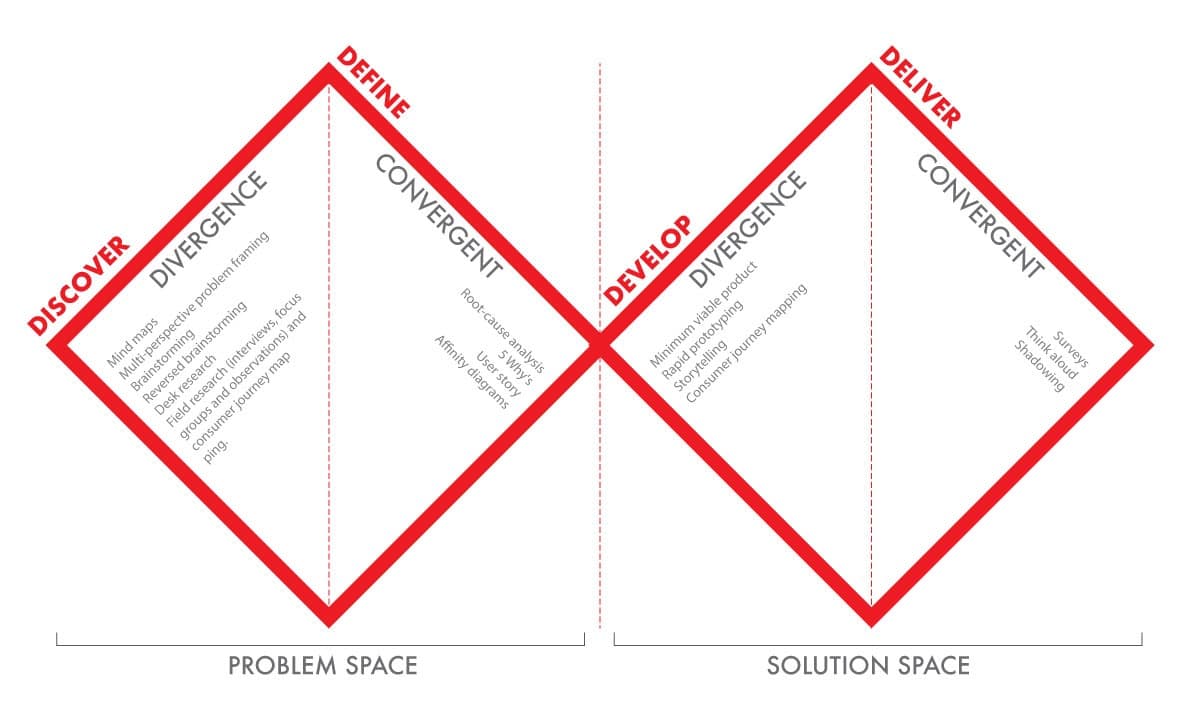
The process is built upon the Double Diamond (DD) Design Process. All mine and our group’s work can be traced back to the DD design process. It serves as the guide that we follow to design the right thing in the right way for the right people.
Discover Phase
The discover phase consisted of ripping the brief and primary and secondary research we conducted to gain a better understanding of the deeper issues and variables we had to know to solve the problem at hand.
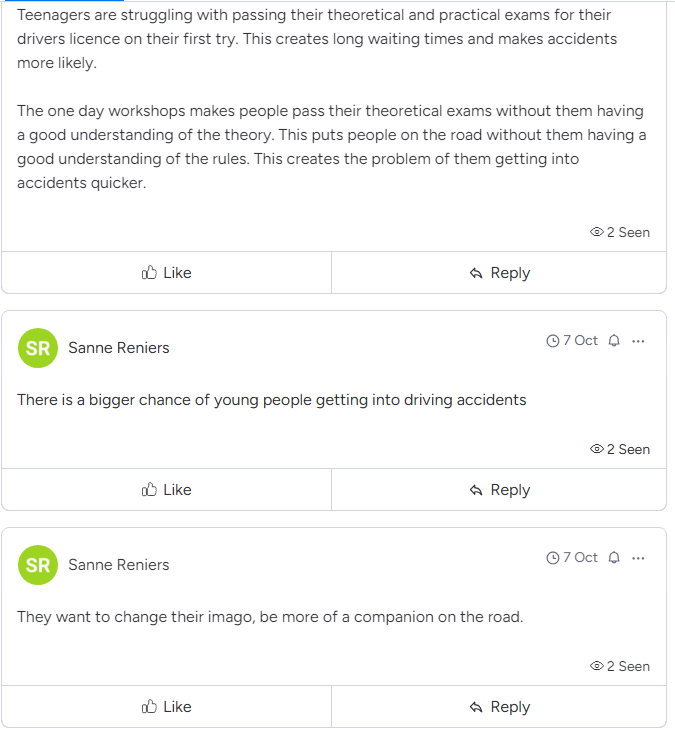
The first step in this phase was to brainstorm together where we outlined a few problems, which we took note of in our Problem Definition. To identify the problems we followed the DD design method. Those problems being:
- Teenagers are struggling with passing their theoretical and practical exams for their driver’s license on their first try. This creates long waiting times and makes accidents more likely.
- There is a bigger chance of young people getting into driving accidents
- CBR wants to change their image, be more of a companion on the road.
- Low success rate of passing exams both practical and theoretical
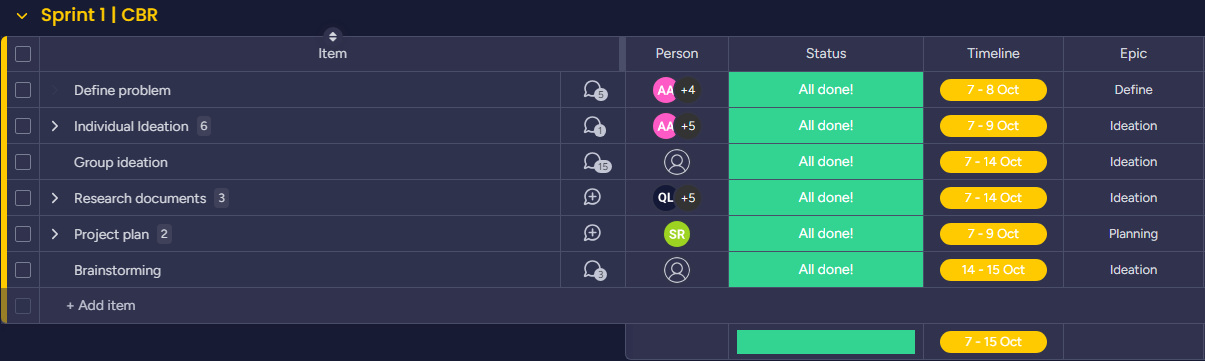
You can find these outlined in our Monday Table
After ripping the brief, we took time to think of potential solutions beforehand to create an image in our head of what the final solution might be at the end. It was mostly a learning app like Duolingo, Imprint etc with our personal functional and design twist.
After that I did research with my team. This research was supposed to broaden our understanding and knowledge of the problem we had at hand from the initial presentation we had with Partout. We did know our Target group and main research question we had to ‘open up’, but this was but the tip of the iceberg. We needed a lot more information about the people that we had to design the solution for, and a deeper understanding of the problems and issues behind the reason for their failures on the exams.
That’s why we delved into research utilized CMD methods such as Literature study, Interviews, Surveys, and Competitive Analysis, which we did a little further in this phase as well.
I took part in the Expert interview + (interview insights), where we had a discussion with a driving instructor about why he thinks people fail their exams, and what the problem might stem from.
The main finding in that interview was that the main culprit for that was anxiety in exam takers. Be it from a feeling of unpreparedness, or plain stress from doing something very important and the expectation that they can potentially fail.
Another thing I did was to interview a friend of mine who had just passed his exam. I also got valuable insight from that interview such as:
- Anxiety and stress is indeed very common before taking a test
- Consistent and targeted practice is essential to passing
- There’s currently unnecessary information in the exams
Doing this research helped us conclude that we had to motivate people to study more consistently and try to alleviate their stress so we can help them pass their exams.
The final thing I did in the Discover Phase was competitive analysis about Theorie Toppers. It’s a service that helps people learn about the rules in drivers’ license exam. The outline of my findings is:
- Best feature: Online video courses with error analysis
- Pros: Practicing and Learning on one platform
- Cons: Lacks direct contact with instructors
- Pricing: Fair pricing with multiple plans to accommodate as many people as possible
Check out our Excel Table for more information.

Define Phase - Project Plan
In the Define Phase we analysed our research and created a concept which we liked, and thought is a solution for the problem. We then made a project plan to follow to help us have a better understanding of the process. After that, it was time to converge after researching and gathering data. My contribution in this phase lies in 3 things. See them below.
Brainstorming Session with team
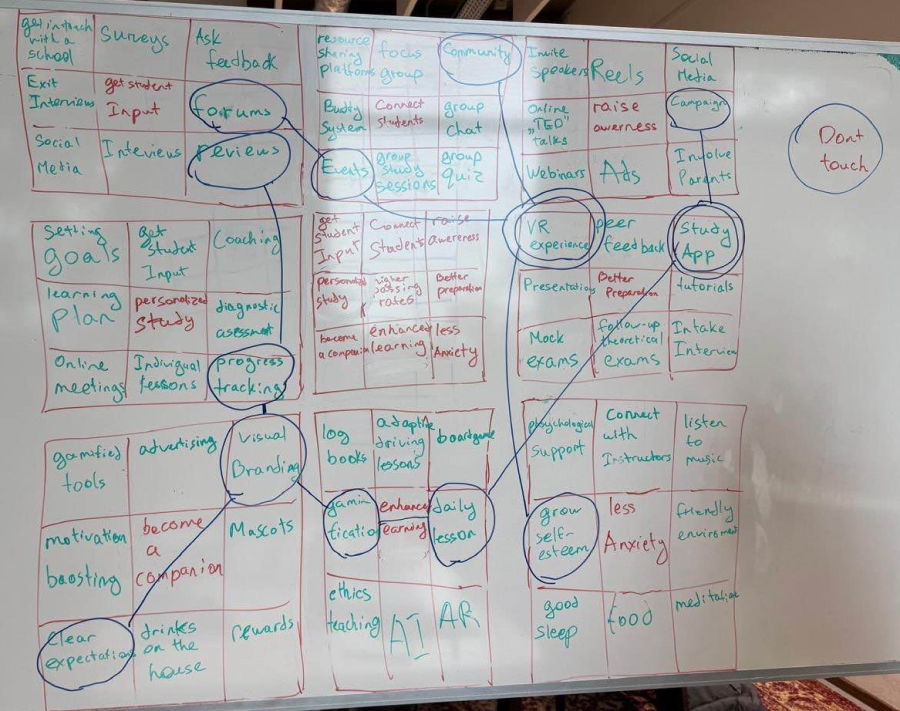
To come up with a good concept which solves the problems discovered, we had a brainstorming sesssion using the Lotus Blossom method. We all took part in it and tried to come up with as many solutions as possible.
In the end, it gave us some of the features that we later put in the app. Things such as gamification, the AR, the idea that we had to boost the self-esteem of the users, daily lessons etc.
MoSCoW table and Eisenhower Matrix
To further build up on both the importance and necessity of the features discovered using the Lotus Blossom, we created a MoSCoW table. Later when we asked for feedback, Dirk told us that what we need is something different. Nevertheless, it helped us as a team to have a mutual understanding of the features we wanted to implement, and the order in which we should prioritize them.
To follow up on Dirk's feedback we created an Eisenhower Matrix, as he suggested that it'd be more useful than a MoSCoW table. It's a table which helps us prioritize the features we want to implement. You can see both the MoSCoW and the matrix on the right.
After this we moved on to the next phase which is the Develop Phase.
Develop Phase
In the develop phase we got our concept ideas from the define phase and we started creating our concept. We divided the tasks between all the team members and at the end we got a design that all of us were happy and on board with. In this phase I did lo-fi Sketches of wireframes, Lo- and Mid-Fidelity digital wireframes, Hi-Fi design of some of the screens of the app, and creating an interactive prototype of the lessons included in the app.
Initial Sketches of App
To come up with a design of the app Artem and I took on the task to create the initial sketches. We took inspiration from the competitive analysis we did on the design of other similar learning apps, and created the wireframes. I focused more on the layout and explored which features could be put in which pages. After that Artem and I started going off of the sketches we had to create the digital wireframe which then we would test to further build up on the design.
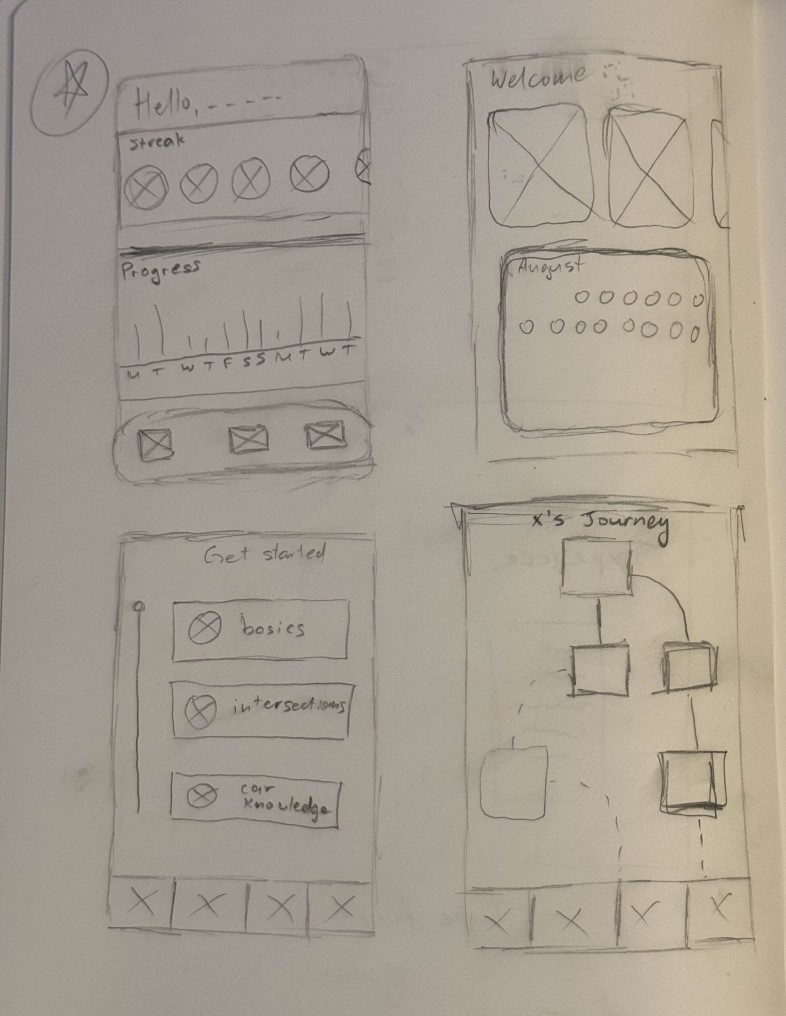
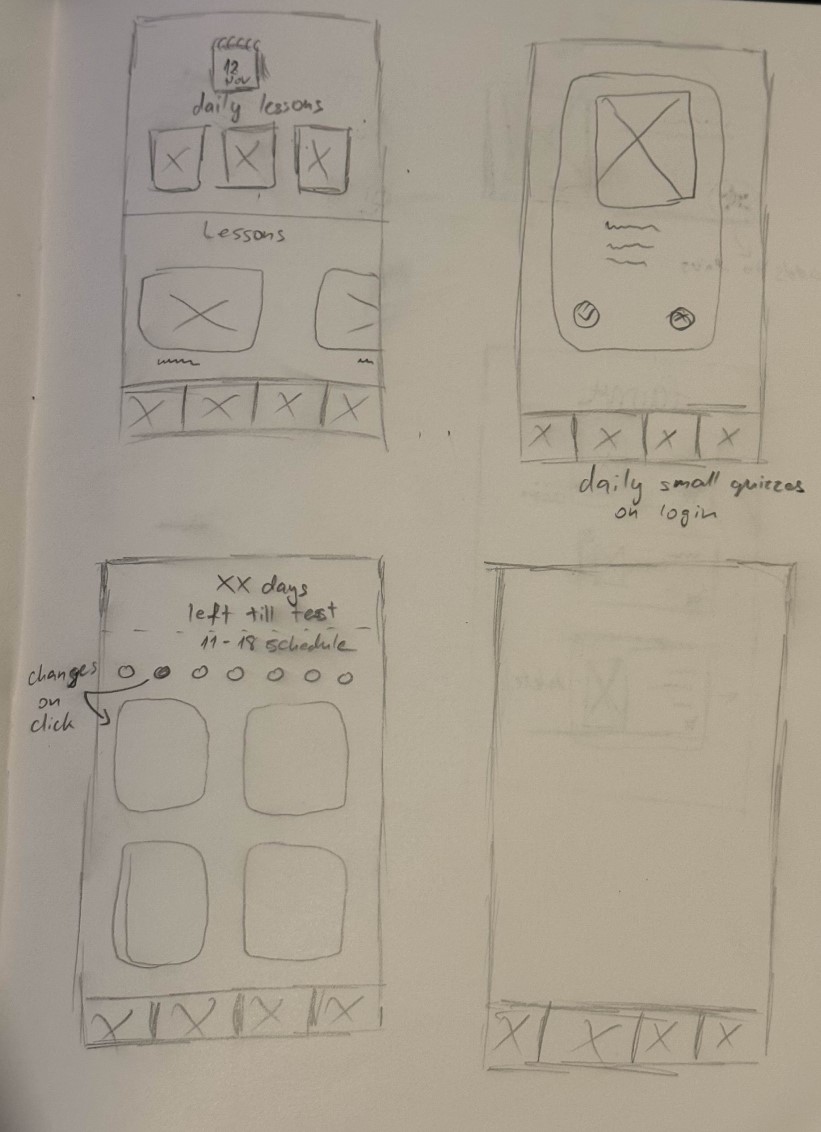
Lo-, Mid- and Hi-Fi Digital Wireframes
After creating the sketches, we put them in digital format to solidify some of the layout and to ask for feedback from our stakeholders if the design is viable for the app.
In this task I did the gamified screen with the path, took part in the navbar's design and pages included in it, and created the daily lesson's and quiz's screens.
I also took part in creating the interactive prototype of the lessons included in the app.
For these components I got feedback mainly from my teammates and colleagues outside of the team. After changes were made, I constantly checked up with anyone, really, to make sure that the designs functioned as intended, and the designs were in line with the rest of the app and the design language.
Some changes over time include:
- Changing the colors of the gamified screen constantly until we landed on our colors
- Changing the design elements on the gamified screen (adding small watermark icons, making the roadmap be a road, letting it flow towards the bottom etc.)
- Positioning the buttons on the quizzes screen until it's intuitive
- Improving the wording on some of the quizzes and making sure the information is just enough and not too much
Deliver Phase
Since our product wasn't something too technical - coded for this case, we had 2 deliverables - the interactive prototype of the Proof of Concept and the presentation we made to our client.
The presentation went well, and the main feedback was that it was a good, likeable product. The 2 main issues were that we had focused on keeping anxiety low with features and design choices, but our stakeholders didn't understand how we approached that. They touched up on points such as the option that we allowed our users to customize if said user's parents could follow their progress and results of the quizzes. Understandably, there was the question why we think this doesn't induce anxiety? The answer to that lies in the research we did and one member of our group personally had that experience that the fact that his parents could follow his progress ensures a transparent communication in the relationship between the family. As long as the user feels safe, this can not only not cause anxiety, it could also facilitate their leraning.
The second issue our stakeholders touched upon was we hadn't used the design language of CBR. In order to make sure we didn't need to do that, we contacted our client. We got a reply which said 'put a twist on cbr's language, feel free to let your imagination run wild' In hindsight we could have interpreted this message better to understand that we needed to use CBR's language and build upon it, rather than completely desigining something new. But we had understood that we could do whatever we wanted with the design, so we did that.
Reflection
In this project I once again realized how important it is for everyone in the team to communicate well and to do their respective job properly. It doesn't need to be perfect. Making an effort and getting assistance when needed is the best way to approach this.
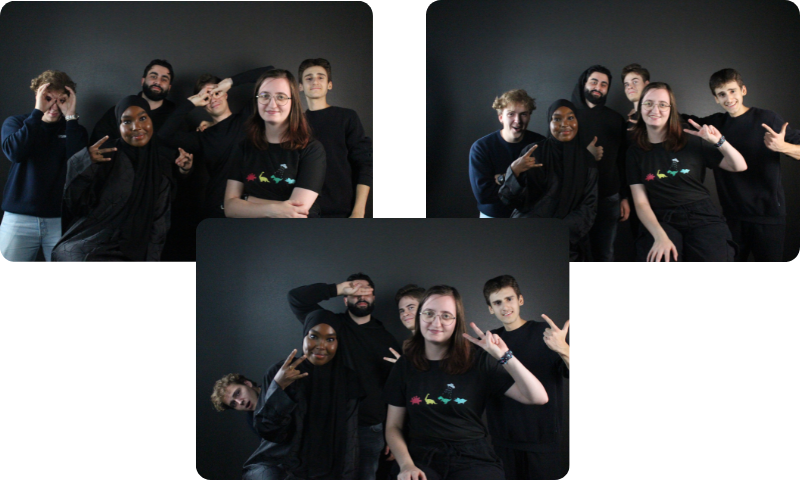
I had an amazing team in which these things were clearly visible and paid attention to. I had great fun and excitement when working with my teammates and it was a good experience overall to have been able to create something which I am proud to have been a part of. I still think that what we created aligns with 99% of the feedback we've received and the research we've conducted. The features we implemented, and the design choices we had were all backed up by the research we did. I vividly remember one or more people in the group ask "It looks really cool, but why did you do it like that?". We all cross-checked each other's designs and ideas to make sure that what we put out is something really well thought out. It might not be perfect. It still has room for improvement but I stand by all the work my team and I did.

Interactive media products
Transferable production
Creative iterations
Professional standards
Personal leadership